Looking for dependable auto repair in Reading, PA? Pick local ASE-certified mechanics who understand PA inspection regulations, road salt effects, and area driving. They diagnose modules, verify freeze-frame data, perform smoke tests, and use bi-directional controls to get it done right the first time. Count on thorough brake, suspension, and steering inspections, OEM-grade parts where safety counts, and upfront estimates with written warranties. Short travel enables quick follow-ups after service or repairs. Keep going to learn how to identify issues and compare shops.
Key Takeaways
- Opt for a local Reading PA shop for quicker diagnostics, smoother follow-ups, and compliance with Pennsylvania inspection standards.
- Find ASE-certified technicians who use OEM-grade scan tools, oscilloscope testing, and smoke/pressure diagnostics for reliable repairs.
- Verify trustworthiness through independent reviews, ASE/OEM certifications, BBB ratings, and positive customer references.
- Look for detailed written estimates, necessary approval for changes, and a written warranty detailing coverage, labor inclusion, and the claims process.
- Ensure services include comprehensive road-testing, brake and suspension checks, alignments, and digital inspections with measured results and photos.
Why Selecting a Local Reading PA Mechanic Is Important
Choosing a nearby shop provides quicker diagnostic services, simpler follow-up visits, and reduced transportation expenses-major benefits when you select a Reading, PA mechanic. You receive service from technicians who understand local driving patterns, road salt exposure, and Pennsylvania inspection standards, enabling targeted maintenance schedules and more rapid parts sourcing. Local partnerships with parts distributors minimize lead times and enhance component traceability, while community involvement keeps shops accountable for craftsmanship and ethics.
You can examine capabilities directly through facility visits, confirming equipment calibration, scanner capabilities, and ASE certifications. Local outreach events frequently display brake lathe accuracy, alignment rack tolerances, and torque procedures, assisting you in checking process discipline. With reduced driving time, you can schedule iterative checks after software updates or repairs, making certain systems relearn properly and warranty terms remain valid.
Indicators That You Need Professional Auto Repair
It's important to schedule professional service when warning lights come on, especially the check engine, ABS, or airbag indicators. If unusual noises remain-such as grinding, knocking, squealing, or metallic rattles-you're probably experiencing component wear or failure. Handling or braking issues, including vehicle pull, vibration, soft pedal, or increased stopping distance, signal safety-critical faults that necessitate immediate inspection.
Warning Indicators Light Up
Sometimes, an illuminated dashboard light is your most apparent signal to schedule professional auto repair in Reading, PA. Modern dashboard indicators link directly to control modules that monitor important systems: engine, transmission, brakes, steering, and emissions. When a light lights up, you're seeing stored diagnostic trouble codes indicating sensor faults, software glitches, wiring issues, or component wear. Ignoring a MIL, ABS, or airbag light presents reduced performance or compromised safety.
You need to document which lamp illuminated and whether it is constant or flashing. A flashing MIL often suggests active misfire requiring immediate attention. Technicians will carry out a scan, verify freeze frame data, test circuits, and confirm operation with bi-directional controls. They'll also rule out lamp failures that imitate real faults. Quick diagnosis avoids collateral damage, safeguards warranties, and restores proper system readiness.
Uncommon Noises Continue
Typically, constant acoustics—grinding metal sounds, regular knocking sounds, shrill screeching, or droning hums—signal component deterioration that requires expert evaluation in Reading, PA. You must not ignore atypical noises; they are warning indicators. A peculiar droning sound that shifts with speed can indicate asymmetric tire deterioration, a deteriorating wheel bearing, or cupped tread. Grinding metal sounds commonly traces to accessory pulley or driveline contact. Rhythmic knocking could point to worn rod bearings, slack valve lifters, or a worn CV joint under load. High‑pitched squealing can be caused by worn serpentine belts or a off-center component. Intermittent clicking often stems from valve clearance problems, reduced oil flow, or contaminants contacting the cooling fan. Record when the acoustic issue emerges—initial startup, idle, speed increase, or after extended operation—and seek a qualified Reading mechanic before early-stage damage escalates.
Issues Related to Handling or Braking
While strange noises can indicate trouble, degraded handling or weak braking turns those hints into safety risks. If you experience a wheel shimmy at highway speeds, you may have unbalanced tires, bent wheels, or worn suspension bushings. Drifting, increased steering effort, or a loose on-center feel can indicate failing tie rods, ball joints, or a misaligned front end. Under braking, pedal pulsation typically points to lateral runout or thickness variation in the rotors, sometimes caused by inadequate lug torque or overheated pads.
Increased stopping distances, a weak or spongy pedal, and brake fade indicate air intrusion, fluid boil, or failing hydraulic components. Act now. A timely inspectionroad test, runout measurement, pad and tire assessment—restores stability, decreases stops, and protects you and your passengers.
Key Service Options to Increase Automobile Life
To extend vehicle life, you need a rigorous routine of regular oil changes using the appropriate viscosity and OEM-grade filters. You should conduct tire rotation at defined mileage intervals to ensure even tread wear, proper alignment, and safe handling. You must also conduct brake system inspections—including pads, rotors, fluid, and lines—to prevent fade, decrease stopping distance, and prevent costly repairs.
Regular Oil Changes
Routine oil changes preserve your engine's bearings, rings, and valvetrain by maintaining proper lubrication, distributing heat, and transporting contaminants to the filter. You decrease varnish, sludge, and wear particles that accelerate clearances and oil consumption. Observe your vehicle's oil life monitor or severe-service interval if you allow extended idling, tow, or drive short trips.
Choose the viscosity grade indicated on the oil cap or manufacturer's manual. High-quality synthetic oil fights oxidation, retains film strength at extreme temperatures, and flows quickly at cold start, decreasing startup wear. Always replace oil filters at each service; a top-tier filter with a durable media and anti-drainback valve maintains pressure and filtration efficiency. Check the drain plug torque and gasket condition, reset maintenance reminders, and record mileage and date.
Tire Rotation Schedules
Frequently disregarded yet essential, tire rotation equalizes tread wear produced by drive-axle load, steering angles, and braking forces, extending tire life and protecting handling. Follow a service interval of 5,000-7,500 miles, or every oil change for severe service (quick journeys, heavy loads, frequent stops). Follow the rotation pattern outlined for your vehicle: front-wheel drive typically benefits from forward cross, rear-wheel and AWD from rearward cross; staggered or directional tires require side-to-side or same-direction swaps.
Check inflation, torque lug nuts to spec, and reset TPMS after each service. Inspect tread depth with a gauge and identify cupping or feathering that suggests the need for seasonal alignment. Regular timing limit long term wear, keep even contact patches, lower noise, and support predictable traction in Reading's changing road conditions.
Brake System Examinations
While even tire wear keeps handling consistent, stopping power depends on a brake system that's inspected on schedule and measured against spec. You should confirm pad thickness with a micrometer, compare rotor thickness and runout to manufacturer tolerances, and examine caliper slide freedom. Examine pad wear indicators for contact noise or sensor alerts, then verify even pad imprinting across rotor faces. Inspect brake hoses for swelling, corrosion at fittings, and leaks. Examine the master cylinder for pedal hold and bypass. Check fluid moisture content with a refractometer or conductivity tester, and conduct brake fluid flushing when levels exceed spec or boiling points drop. Lastly, road-test for pulsation, pull, and ABS activation thresholds to confirm hydraulic balance and control.
Professional Diagnostics and Check Engine Light Services
What's the process to identify the reason for a stubborn check engine light without guesswork? You begin with data. We attach professional scan tools to obtain manufacturer-specific DTCs, freeze-frame data, and live PIDs, then cross-reference them with fuel trims, misfire counters, O2 sensor waveforms, and CAN traffic. Next, we execute guided fault tests: smoke tests for EVAP leaks, bidirectional controls for actuator verification, and scope-based circuit analysis to locate intermittent faults.
We additionally utilize remote telemetry to observe sensor behavior under real-world demands, facilitating pattern recognition that exceeds a short road test. After repairs, we verify emission calibration integrity, clear monitors, and perform drive-cycle completion to confirm readiness. You depart with a documented root cause, verified fix, and a light that remains off.
Brake, Suspension, & Steering Repairs You Can Trust
Dependably stopping, cornering, and running straight requires a coordinated system: brake pressure systems and friction materials, suspension geometry and bushings, and steering connections and assist. You need reliable braking bite, linear pedal response, and stable chassis performance. We verify pad thickness, rotor runout, and caliper slide operation, then examine hydraulic lines for rust, expansion, or leaks. We execute factory bleeding protocols to remove microbubbles that create fade and long pedal travel. For suspension, we assess ride height, bushing deflection, ball joint play, and shock performance. After component renewal, we execute precise wheel alignment to reestablish camber, caster, and toe. Steering systems get tie-rod, rack, and pump checks, plus torque-to-spec fasteners. The result is uniform deceleration, confident turn-in, and straight-line stability.
Engine and Transmission Specialists in Reading PA
You receive advanced diagnostics that identify engine and transmission faults with OEM-grade scanners, active data, and pressure/vacuum tests. Skilled technicians examine freeze-frame data, misfire counters, and adaptation values to determine root causes, not just symptoms. When needed, you get professional transmission rebuild services-complete disassembly, inspection to spec, replacement of worn clutch packs and seals, valve body fine-tuning, and verification on a scan and road test.
Advanced Testing Capabilities
Locate faults faster with sophisticated diagnostics that merge OEM-grade scan tools with thorough testing by ASE-certified technicians in Reading, PA. You'll benefit from detailed fault-code interpretation, bidirectional control tests, and live data analysis that determine root causes-not symptoms. We correlate freeze-frame data, misfire counters, fuel trims, and mode 6 results to validate findings before any repair.
Our comprehensive diagnostics incorporate oscilloscope waveform capture, smoke testing, and pressure transducer analysis to identify mechanical, electrical, or software issues. We carry out network topology analyses on CAN, LIN, and FlexRay to eliminate intermittent communication faults. You'll receive software updates, relearns, and calibrations carried out to manufacturer specs.
We also utilize predictive maintenance insights derived from trend data-battery conductance, ignition patterns, oil condition, and thermal profiles-to anticipate failures and minimize downtime.
Transmission Rebuild Services
If your transmission experiences slipping, shuddering, or triggers ratio and pressure codes, our Reading, PA team breaks down, evaluates, and restores the unit to OEM specs with precise calibration. We measure every clutch pack, check endplay, and blueprint clearances. We install new frictions, steels, bushings, seals, and updated valve body calibrations. We replace worn solenoids, ream bores as required, and confirm pump volume. Hard parts are magnafluxed; worn components are replaced with original equipment or certified remanufactured components.
We never guess fluids-we verify fluid compatibility for ATF, CVT, and DCT units and install the correct adaptive learn. Once assembled, we conduct pressure tests on circuits, adjust line rise, and validate through road testing shift timing and TCC apply. You'll leave with a documented build, warranty coverage, and restored drivability.
Transparent Pricing Structure, Warranty Coverage, and Customer Assurances
Even though repair quality is important, clear pricing and strong guarantees build trust in Reading PA's auto shops. You should expect written estimates that itemize labor hours, diagnostic fees, shop supplies, taxes, and line-item parts costs-proof of pricing transparency. Modifications require your approval before work begins. Reliable shops publish labor rates, honor flat-rate manuals, and document any sublet services.
Obtain warranty terms in writing: coverage period (months/miles), included components, labor inclusion, nationwide acceptance, and claim protocols. Confirm exclusions, transferability, and prorated conditions. Select shops providing digital inspections with photos, torque specifications, and test results that confirm repairs.
Service commitments ought to establish turnaround timelines, road-test verification, and post-service verifications. You merit explicit escalation routes, factory-compliant protocols, and a specific liaison for prompt communication and solutions.
OEM versus Aftermarket Parts: Which is Best for Your Auto
Clear the confusion by clarifying your options: OEM parts match your automobile's original specifications, while aftermarket parts span from equivalent replacements to performance upgrades from third-party manufacturers. When you go with OEM, you get original manufacturer parts built to the exact tolerances, materials, and calibration your vehicle was designed with-optimal for preserving factory performance and emissions compliance. Aftermarket parts differ: reputable brands satisfy or exceed OEM standards, while budget components can introduce fitment issues, noise, or accelerated wear.
Complete a cost comparison by assessing part price, longevity, and labor. A cheaper component that fails early costs more once you include repeat labor and downtime. Consider warranty alignment, availability, and criticality: use OEM for safety systems, complex electronics, and newer vehicles; choose high-quality aftermarket for wear items like brakes, filters, and suspension.
How to Assess Reputation: Reviews, Certifications, and Referrals
Typically, you'll assess an auto shop's reputation by cross-referencing reviews, certifications, and referrals. Begin by examining third-party reviews: filter by vehicle type, repair category, and date to spot consistent patterns, not outliers. Check the shop's online presence: a complete website, technician bios, and transparent pricing pages indicate operational rigor. Verify certifications-ASE, OEM training, and I-CAR for collision-then confirm they're current via issuer directories.
Evaluate complaint ratios on BBB and state AG databases; a low frequency with documented resolutions signals strong quality control. Ask for customer surveys or net promoter scores; trustworthy shops will share trend data, not cherry-picked quotes. Seek referrals from local fleets or dealerships; recurring contracts indicate reliability. Verify estimates and warranty terms with references to verify claims align with delivered work.
Scheduling, Turnaround Times, and Convenience Options
Once you verify a shop's credibility, verify it can meet your timetable and logistics. Ask for the next available appointment slots, estimated start dates, and expected completion timeframes by job type- oil change, brake service, diagnostics, or major repairs. Ask for written ETAs and parts lead times; delays often result from backordered components.
Verify service procedures: processing time, approval limits for diagnostics, and progress update timing (by SMS or email). Validate options for Off-hours vehicle drop-off, safe key drop boxes, and weekend drop-off options. If you need mobility, verify shuttle service radius, service frequency, and service cutoff schedules, or validate partner rental discounts.
Question regarding same-day turnaround for rapid services, triage for vehicles that won't start, and priority options for safety-critical failures. Additionally, verify warranty documentation, payment timing, and pick-up procedures to eliminate bottlenecks.
Frequently Asked Questions
Will Local Auto Shops Supply Loaner Automobiles or Shuttle Services Throughout Repairs?
Yes. Many local shops supply loaner vehicles or shuttle services while performing repairs. You will usually book availability in advance, verify insurance, and sign a brief agreement. If loaners are in short supply, shops organize check here shuttle routes, ride sharing, or reimbursements. For larger fleets, they incorporate fleet management tools to track vehicle allocation and turnaround time. Always confirm eligibility, mileage limits, fuel policy, and coverage. Inquire about peak-demand limitations and required driver credentials before drop-off.
Can I Supply My Own Parts for Installation?
While most automotive shops accept customer-supplied parts, their policies vary. Anticipate a pre-installation inspection to confirm compatibility and safety. A waiver acknowledging warranty implications will typically be required: the shop's workmanship warranty might be limited, and part defects won't be covered. You assume responsibility for part quality, proper specifications, and any defect-related delays. Include OEM numbers, proper torque specs, and all required seals or hardware. Ask about diagnostic fees, storage, and return protocols upfront.
How Do Reading PA Auto Shops Deal With Hybrid or EV Repairs?
You'll discover many service centers service EVs and hybrids using proper hybrid credentials, insulated equipment, and factory service information-and as you'll notice, you'll see consistent safety lockout practices in every facility. They conduct battery system diagnostics via scan equipment, heat imaging, and resistance tests, then isolate faults in high-voltage relays, DC-to-DC converters, or thermal management loops. You'll get system firmware updates, insulation testing (using a megohmmeter), and dielectric coolant testing. Should traction packs need service, they follow manufacturer containment protocols, manufacturer torque specs, and pack rebalancing procedures.
What Are the Available After-Hours or Emergency Support Options?
You can access 24/7 Towing, emergency drop-off, and on-call dispatch. Most facilities direct after-hours calls to a live line that coordinates Mobile Technicians for jump-starts, lockouts, battery swaps, or triage. You'll get ETA texts, digital estimates, and photo diagnostics. Should roadside repairs not be possible, your vehicle will be towed to a protected lot and place you in line for expedited morning service. Payment, approvals, and updates run through secure portals to maintain complete traceability.
Are Digital Vehicle Inspections Including Photos/Videos Available?
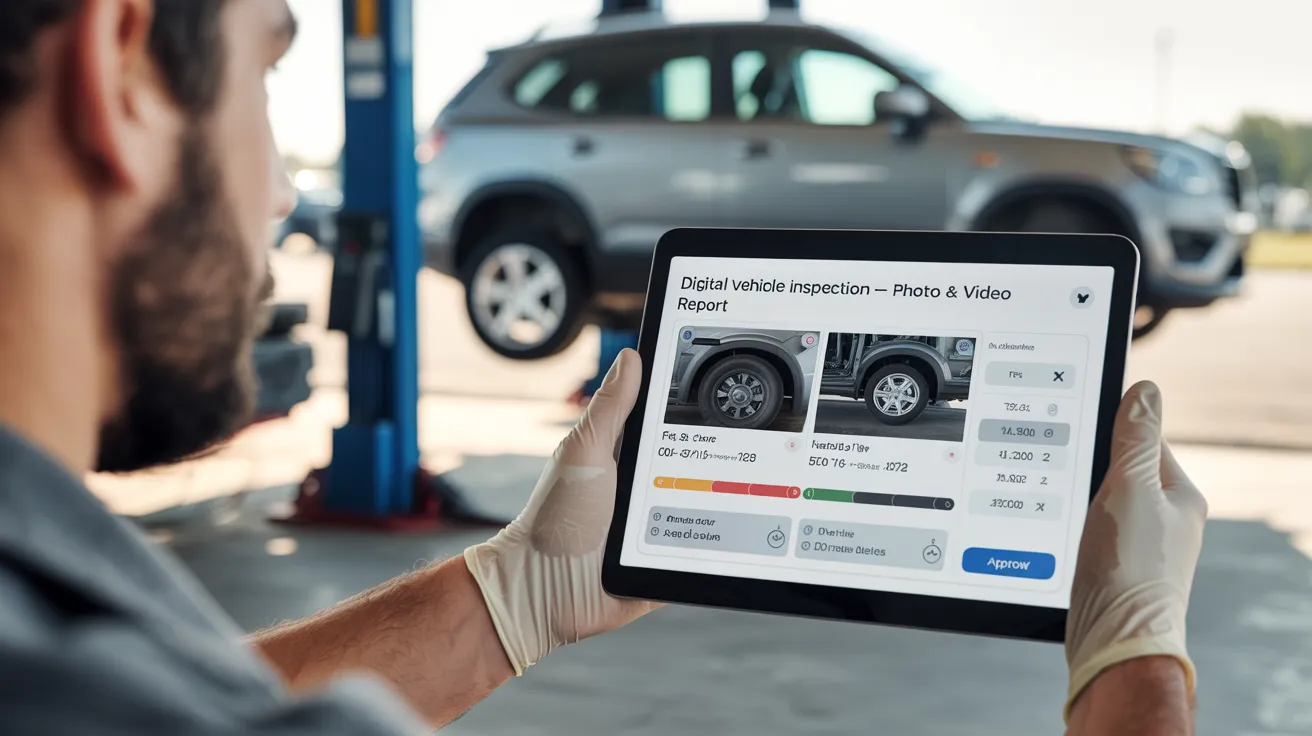
Yes, you'll receive digital vehicle inspections featuring photos and videos. Service professionals record component condition, measurements, and fault codes, before generating digital documentation you can review on any device. Visual reports include annotated images, short clips, severity ratings, and recommended actions with timelines. The reports display baseline readings, wear thresholds, and OE specs for clarity. Review and approve work directly from the report, and your history is maintained for trend analysis and warranty validation.
Closing Remarks
You want a Reading, PA auto repair shop that's precise, local, and trusted. Trust ASE-certified techs who use OEM-quality parts, advanced diagnostics, and upfront quotes. When brakes vibrate, steering pulls, or the check engine light comes on, don't wait-address it immediately. Choose shops with written warranties, clear turnaround times, and convenient scheduling options. Review reviews, certifications, and referrals before you book. With the right team, you'll maximize your car's longevity, control costs, and drive with confidence every mile.